Đề kiểm tra 45 phút Chương 5 Vectơ Sách CTST

Mô tả thêm: Đề kiểm tra 1 tiết Toán 10 Vectơ gồm 40 câu hỏi trắc nghiệm giúp bạn học ôn tập, củng cố lại kiến thức sách Chân trời sáng tạo.
  • Thời gian làm: 45 phút
  • Số câu hỏi: 40 câu
  • Số điểm tối đa: 40 điểm
Trước khi làm bài bạn hãy
  • 1 Ôn tập kiến thức đã nêu trong phần Mô tả thêm
  • 2 Tìm không gian và thiết bị phù hợp để tập trung làm bài
  • 3 Chuẩn bị sẵn dụng cụ cần dùng khi làm bài như bút, nháp, máy tính
  • 4 Căn chỉnh thời gian làm từng câu một cách hợp lý
Mua gói để Làm bài
  • Câu 1: Thông hiểu

    Cho hình vuông ABCD. Khẳng định nào sau đây đúng?

    Chọn \left| \overrightarrow{AB} ight| =
\left| \overrightarrow{BC} ight|. Vì AB = BC \Leftrightarrow \left| \overrightarrow{AB}
ight| = \left| \overrightarrow{BC} ight|.

  • Câu 2: Nhận biết

    Vectơ có điểm đầu là D, điểm cuối là E được kí hiệu là

    Vectơ có điểm đầu là D, điểm cuối là E được kí hiệu là \overrightarrow{DE}.

  • Câu 3: Nhận biết

    Hình bình hành ABCD tâm O. Khẳng định sai là:

    Ta có: \overrightarrow{OA} -
\overrightarrow{OD} = \overrightarrow{OA} + \overrightarrow{BO} =
\overrightarrow{BA}.

    Chọn đáp án sai \overrightarrow{OA} -
\overrightarrow{OD} = \overrightarrow{BC}.

  • Câu 4: Vận dụng

    Cho 2 vectơ \overrightarrow{a} và \overrightarrow{b} có \left| \overrightarrow{a} ight| = 4, \left| \overrightarrow{b} ight| =
5 và \left(
\overrightarrow{a},\overrightarrow{b} ight) = 120^{o}.Tính \left| \overrightarrow{a} +
\overrightarrow{b} ight|.

    Ta có \left| \overrightarrow{a} +\overrightarrow{b} ight| = \sqrt{\left( \overrightarrow{a} +\overrightarrow{b} ight)^{2}}= \sqrt{{\overrightarrow{a}}^{2} +{\overrightarrow{b}}^{2} + 2\overrightarrow{a}.\overrightarrow{b}}=\sqrt{\left| \overrightarrow{a} ight|^{2} + \left| \overrightarrow{b}ight|^{2} + 2\left| \overrightarrow{a} ight|\left|\overrightarrow{b} ight|\ \ \cos\left(\overrightarrow{a},\overrightarrow{b} ight)}= \sqrt{21}.

  • Câu 5: Vận dụng

    Cho hai lực \overrightarrow{F_1} và \overrightarrow{F_2} cùng tác động vào một vật đứng tại điểm O, biết hai lực \overrightarrow{F_1} và \overrightarrow{F_2} đều có cường độ là 50 (N) và chúng hợp với nhau một góc 60°. Hỏi vật đó phải chịu một lực tổng hợp có cường độ bằng bao nhiêu?


    Đặt \overrightarrow {AB},\overrightarrow {AC},\overrightarrow {AD} tương ứng với các vectơ\overrightarrow {F} như hình vẽ.

    Ta có: \left| {\overrightarrow {AB}  + \overrightarrow {AC} } ight| = \left| {\overrightarrow {AB}  + \overrightarrow {BD} } ight| = \left| {\overrightarrow {AD} } ight| = AD.

    Theo đề bài, góc \widehat{B AC} bằng 60 độ. Suy ra \hat B=120^{\circ}.

    A{D^2} = A{B^2} + B{D^2} - 2.AB.BD.\cos 60^\circ  = 7500. Suy ra AD=50\sqrt3N.


  • Câu 6: Nhận biết

    Cho hai vectơ không cùng phương \overrightarrow{a} và \overrightarrow{b}. Mệnh đề nào sau đây đúng?

    Mệnh đề đúng là: "Có một vectơ cùng phương với cả hai vectơ \overrightarrow{a} và \overrightarrow{b}, đó là \overrightarrow{0}."

  • Câu 7: Nhận biết

    Trên mặt phẳng tọa độ Oxy, cho các điểm A(1;2), B(-1;3), C(-2;1). Chọn khẳng định đúng.

    Biểu diễn các điểm trên hệ trục tọa độ như sau:

    Chọn khẳng định đúng

    Ta có:

    \begin{matrix}  \overrightarrow {OA}  = \left( {1,2} ight) \hfill \\  \overrightarrow {BC}  = \left( { - 2 + 1,1 - 3} ight) = \left( { - 1, - 2} ight) =  - 1.\left( {1,2} ight) =  - 1.\overrightarrow {OA}  \hfill \\ \end{matrix}

    Vậy hai vectơ \overrightarrow{OA},\overrightarrow{BC} cùng phương, ngược hướng.

  • Câu 8: Thông hiểu

    Trong hệ tọa độ Oxy, cho tam giác ABC có \
B(9;7),\ C(11; - 1). Gọi M,N lần lượt là trung điểm của AB,\ AC. Tìm tọa độ vectơ \overrightarrow{MN}?

    Ta có \overrightarrow{MN} =
\frac{1}{2}\overrightarrow{BC} = \frac{1}{2}(2; - 8) = (1; -
4).

  • Câu 9: Nhận biết

    Cho \overrightarrow{a} e\overrightarrow{0} và điểm O. Gọi M, N lần lượt là hai điểm thỏa mãn \overrightarrow{OM}=3\overrightarrow{a} và \overrightarrow{ON}=-4\overrightarrow{a}. Tìm \overrightarrow{MN}.

    Ta có:

    \begin{matrix}  \overrightarrow {MN}  = \overrightarrow {MO}  + \overrightarrow {ON}  \hfill \\   \Rightarrow \overrightarrow {MN}  =  - \overrightarrow {OM}  + \overrightarrow {ON}  \hfill \\   \Rightarrow \overrightarrow {MN}  =  - 3\overrightarrow a  + \left( { - 4\overrightarrow a } ight) \hfill \\   \Rightarrow \overrightarrow {MN}  =  - 3\overrightarrow a  - 4\overrightarrow a  = 7\overrightarrow a  \hfill \\ \end{matrix}

  • Câu 10: Nhận biết

    Biết \overrightarrow{a},\overrightarrow{b}eq \overrightarrow{0} và \overrightarrow{a}\times \overrightarrow{b}=-|\overrightarrow{a}|\times |\overrightarrow{b}|. Câu nào sau đây đúng?

     Ta có:

    \begin{matrix}  \vec a.\vec b =  - |\vec a|.|\vec b| = |\vec a|.|\vec b|.\cos {180^0} \hfill \\   \Rightarrow \left( {\vec a,\vec b} ight) = {180^0} \hfill \\ \end{matrix}

    => \overrightarrow{a} và \overrightarrow{b} ngược hướng.

  • Câu 11: Nhận biết

    Cho tam giác ABC đều cạnh a. Mệnh đề nào sau đây đúng?

    Độ dài các cạnh của tam giác là a thì độ dài các vectơ \left| \overrightarrow{AB} ight| = \left|
\overrightarrow{BC} ight| = \left| \overrightarrow{CA} ight| =
a.

  • Câu 12: Thông hiểu

    Cho tam giác ABC có trọng tâm G. Biểu diễn \overrightarrow{AG} theo hai vecto \overrightarrow{AB},\overrightarrow{AC}

    Cách 1: Giả sử I là trung điểm của BC

    \begin{matrix}   \Rightarrow \overrightarrow {AB}  + \overrightarrow {AC}  = 2\overrightarrow {AI}  \hfill \\   \Leftrightarrow \dfrac{1}{2}\left( {\overrightarrow {AB}  + \overrightarrow {AC} } ight) = \overrightarrow {AI}  \hfill \\ \end{matrix}

    Theo tính chất đường trung tuyến trong tam giác ABC ta có:

    \left\{ {\begin{array}{*{20}{c}}  {AG = \dfrac{2}{3}AI} \\   {\overrightarrow {AG}  earrow  earrow \overrightarrow {AI} } \end{array}} ight. \Rightarrow \overrightarrow {AG}  = \dfrac{2}{3}\overrightarrow {AI}

    \begin{matrix}   \Rightarrow \overrightarrow {AG}  = \dfrac{2}{3}.\dfrac{1}{2}\left( {\overrightarrow {AB}  + \overrightarrow {AC} } ight) \hfill \\   \Rightarrow \overrightarrow {AG}  = \dfrac{1}{3}\left( {\overrightarrow {AB}  + \overrightarrow {AC} } ight) \hfill \\   \Rightarrow \overrightarrow {AG}  = \dfrac{1}{3}\overrightarrow {AB}  + \dfrac{1}{3}\overrightarrow {AC}  \hfill \\ \end{matrix}

    Cách 2: Ta có:

    \begin{matrix}  \overrightarrow {AB}  + \overrightarrow {AC}  + \overrightarrow {AA}  = 3\overrightarrow {AG}  \hfill \\   \Rightarrow \overrightarrow {AB}  + \overrightarrow {AC}  + \overrightarrow 0  = 3\overrightarrow {AG}  \hfill \\   \Rightarrow \overrightarrow {AB}  + \overrightarrow {AC}  = 3\overrightarrow {AG}  \hfill \\   \Rightarrow \dfrac{1}{3}\left( {\overrightarrow {AB}  + \overrightarrow {AC} } ight) = \overrightarrow {AG}  \hfill \\ \end{matrix}

  • Câu 13: Nhận biết

    Cho hình vuông ABCD cạnh bằng a. Tính độ dài véctơ \overrightarrow{BA} +
\overrightarrow{BC}.

    Hình vẽ minh họa:

    |\overrightarrow{BA} +
\overrightarrow{BC}| = |\overrightarrow{BD}| = a\sqrt{2}.

  • Câu 14: Thông hiểu

    Cho 4 điểm A, B, C, D phân biệt. Khi đó \overrightarrow{AB}-\overrightarrow{DC}+\overrightarrow{BC}-\overrightarrow{AD} bằng

    Ta có:

    \begin{matrix}  \overrightarrow {AB}  - \overrightarrow {DC}  + \overrightarrow {BC}  - \overrightarrow {AD}  \hfill \\   = \left( {\overrightarrow {AB}  + \overrightarrow {BC} } ight) - \left( {\overrightarrow {DC}  + \overrightarrow {AD} } ight) \hfill \\   = \overrightarrow {AC}  - \overrightarrow {AC}  = \overrightarrow 0  \hfill \\ \end{matrix}

  • Câu 15: Nhận biết

    Trong mặt phẳng tọa độ Oxy cho tọa độ hai điểm A( - 1;3),B(2; - 1). Tính tọa độ vecto \overrightarrow{AB}?

    Ta có: A( - 1;3),B(2; - 1)

    \Rightarrow \overrightarrow{AB} = \left(
- 2 - ( - 1); - 1 - 3 ight) = (3; - 4)

    Vậy \overrightarrow{AB} = (3; -
4).

  • Câu 16: Vận dụng

    Cho hình thang ABCD có đáy là AB và CD. Gọi M và N lần lượt là trung điểm của AD và BC. Khẳng định nào sau đây sai?

    Vì M,\ \ N lần lượt là trung điểm của AD,\ \ BC \Rightarrow \left\{
\begin{matrix}
\overrightarrow{MA} + \overrightarrow{MD} = \overrightarrow{0} \\
\overrightarrow{BN} + \overrightarrow{CN} = \overrightarrow{0} \\
\end{matrix} ight.\ . Dựa vào đáp án, ta có nhận xét sau:

    \bullet \overrightarrow{MN} = \overrightarrow{MD} +
\overrightarrow{CN} + \overrightarrow{DC} đúng, vì \overrightarrow{MD} + \overrightarrow{CN} +\overrightarrow{DC} = \overrightarrow{MN}= \left( \overrightarrow{MD} +\overrightarrow{DC} ight) + \overrightarrow{CN} = \overrightarrow{MC}+ \overrightarrow{CN}= \overrightarrow{MN}

    \bullet \overrightarrow{MN} = \overrightarrow{AB} -
\overrightarrow{MD} + \overrightarrow{BN} đúng, vì \overrightarrow{AB} - \overrightarrow{MD} +\overrightarrow{BN} = \left( \overrightarrow{AB} + \overrightarrow{BN}ight) - \overrightarrow{MD}= \overrightarrow{AN} -\overrightarrow{AM} = \overrightarrow{MN}

    \bullet \overrightarrow{MN} =
\frac{1}{2}\left( \overrightarrow{AB} + \overrightarrow{DC}
ight) đúng, vì \overrightarrow{MN} = \overrightarrow{MA} +
\overrightarrow{AB} + \overrightarrow{BN} và \overrightarrow{MN} = \overrightarrow{MD} +
\overrightarrow{DC} + \overrightarrow{CN}.

    Suy ra 2\overrightarrow{MN}= \left(\overrightarrow{MA} + \overrightarrow{MD} ight) + \overrightarrow{AB}+ \overrightarrow{DC} + \left( \overrightarrow{BN} + \overrightarrow{CN}ight)= \overrightarrow{0} + \overrightarrow{AB} + \overrightarrow{DC}+ \overrightarrow{0} = \overrightarrow{AB} +\overrightarrow{DC}\overset{}{ightarrow}\overrightarrow{MN} =\frac{1}{2}\left( \overrightarrow{AD} + \overrightarrow{BC}ight).

    \bullet \overrightarrow{MN} =
\frac{1}{2}\left( \overrightarrow{AD} + \overrightarrow{BC}
ight) sai, vì theo phân tích ở đáp án trên. Chọn đáp án này.

  • Câu 17: Thông hiểu

    Cho ba điểm phân biệt A, B, C. Khẳng định nào sau đây đúng?

     Ta có:

    \overrightarrow{CA}-\overrightarrow{BA}=\overrightarrow{CB}e  \overrightarrow{BC} => Khẳng định sai

    \overrightarrow{AB}+\overrightarrow{CA}=\overrightarrow{CB} e\overrightarrow{BC} => Khẳng định sai

     \overrightarrow{AB}+\overrightarrow{CA}=\overrightarrow{CB} => Khẳng định đúng

    \overrightarrow{AB}-\overrightarrow{BC}e\overrightarrow{CA}=> Khẳng định sa

  • Câu 18: Vận dụng cao

    Cho hình vuông ABCD tâm O cạnh a. Biết rằng tập hợp điểm M thỏa mãn 2MA^{2} + MB^{2} + 2MC^{2} + MD^{2} =
9a^{2} là một đường tròn. Tính bán kính của đường tròn.

    Ta có: 

    2MA^{2} + MB^{2} + 2MC^{2} + MD^{2} =
9a^{2}

    \Leftrightarrow 2\left(
\overrightarrow{MO} + \overrightarrow{OA} ight)^{2} + \left(
\overrightarrow{MO} + \overrightarrow{OB} ight)^{2} + 2\left(
\overrightarrow{MO} + \overrightarrow{OC} ight)^{2} + \left(
\overrightarrow{MO} + \overrightarrow{OD} ight)^{2} =
9a^{2}

    \Leftrightarrow 6MO^{2} + 2OA^{2} +
OB^{2} + 2OC^{2} + OD^{2}

    +
2\overrightarrow{MO}\left( 2\overrightarrow{OA} + \overrightarrow{OB} +
2\overrightarrow{OC} + \overrightarrow{OD} ight) = 9a^{2}

    Do 2\overrightarrow{OA} +
\overrightarrow{OB} + 2\overrightarrow{OC} + \overrightarrow{OD} =
\overrightarrow{0}

    \Leftrightarrow 6MO^{2} + 3a^{2} =
9a^{2}

    \Leftrightarrow MO = a

    Vậy tập hợp các điểm M là đường tròn tâm O, bán kính R = a.

  • Câu 19: Thông hiểu

    Cho các vectơ \overrightarrow{a} = (1; - 3),\ \
\overrightarrow{b} = (2;5). Tính tích vô hướng của \overrightarrow{a}\left( \overrightarrow{a} +
2\overrightarrow{b} ight).

    Ta có \overrightarrow{a}.\overrightarrow{a} =
10, \overrightarrow{a}.\overrightarrow{b} = -
13 suy ra \overrightarrow{a}\left(
\overrightarrow{a} + 2\overrightarrow{b} ight) = - 16.

  • Câu 20: Vận dụng cao

    Trong hệ tọa độ Oxy, cho ba điểm A(1;0),\ B(0;3) và C( - 3; - 5). Tìm điểm M thuộc trục hoành sao cho biểu thức P = \left| 2\overrightarrow{MA} -
3\overrightarrow{MB} + 2\overrightarrow{MC} ight| đạt giá trị nhỏ nhất.

    Ta có

    2\overrightarrow{MA} -3\overrightarrow{MB} + 2\overrightarrow{MC} =2\left(\overrightarrow{MI} + \overrightarrow{IA} ight) - 3\left(\overrightarrow{MI} + \overrightarrow{IB} ight) + 2\left(\overrightarrow{MI} + \overrightarrow{IC} ight),\ \forall I

    = \overrightarrow{MI} + 2\left(
\overrightarrow{IA} - 3\overrightarrow{IB} + 2\overrightarrow{IC}
ight),\ \forall I.

    Chọn điểm I sao cho 2\overrightarrow{IA} - 3\overrightarrow{IB} +
2\overrightarrow{IC} = \overrightarrow{0}. (*)

    Gọi I(x;y), từ (*) ta có

    \left\{ \begin{matrix}2(1 - x) - 3(0 - x) + 2( - 3 - x) = 0 \\2(0 - y) - 3(2 - y) + 2( - 5 - y) = 0 \\\end{matrix} \Leftrightarrow \left\{ \begin{matrix}x = - 4 \\y = - 16 \\\end{matrix} ight.\  ight.\  \Rightarrow I( - 4; - 16).

    Khi đó P = \left| 2\overrightarrow{MA} -3\overrightarrow{MB} + 2\overrightarrow{MC} ight|= \left|\overrightarrow{MI} ight| = MI.

    Để P nhỏ nhất \Leftrightarrow MI nhỏ nhất. Mà M thuộc trục hoành nên MI nhỏ nhất khi M là hình chiếu vuông góc của I lên trục hoành \overset{}{ightarrow}M( - 4;0).

  • Câu 21: Nhận biết

    Cho hình thoi ABCD có AC = 8, BD = 5. Tính \overrightarrow{AC}\times \overrightarrow{BD}.


    Vì AC\perp BD nên \overrightarrow {AC} .\overrightarrow {BD}  = 0.

  • Câu 22: Thông hiểu

    Gọi O là giao điểm của hai đường chéo hình chữ nhật ABCD. Mệnh đề nào sau đây đúng?

    Mệnh đề đúng là \left|
\overrightarrow{AC} ight| = \left| \overrightarrow{BD}
ight|. Do độ dài hai đường chéo hình chữ nhật bằng nhau.

  • Câu 23: Vận dụng

    Cho tam giác ABC với trực tâm H. D là điểm đối xứng với B qua tâm O của đường tròn ngoại tiếp tam giác ABC. Khẳng định nào sau đây là đúng?

    Ta có BD là đường kính\Rightarrow \overrightarrow{OB} =
\overrightarrow{DO}.

    Ta có AH\bot BC,DC\bot BC \Rightarrow
AH//DC(1)

    Ta lại cóCH\bot AB,DA\bot AB \Rightarrow
CH//DA(2)

    Từ (1)(2) \Rightarrowtứ giác HADC là hình bình hành\Rightarrow \overrightarrow{HA} =
\overrightarrow{CD};\overrightarrow{AD} =
\overrightarrow{HC}.

  • Câu 24: Nhận biết

    Cho tam giác đều ABC có cạnh bằng a. Tính tích vô hướng \overrightarrow{AB}.\overrightarrow{AC}.

    \overrightarrow{AB}.\overrightarrow{AC}.
= \left| \overrightarrow{AB} ight|.\left| \overrightarrow{AC}
ight|.cos\left( \overrightarrow{AB},\overrightarrow{AC} ight) =
a.a.cos60^{{^\circ}} = \frac{a^{2}}{2}.

  • Câu 25: Nhận biết

    Tính tổng \overrightarrow{MN} + \overrightarrow{PQ} +
\overrightarrow{RN} + \overrightarrow{NP} +
\overrightarrow{QR}.

    Ta có \overrightarrow{MN} +\overrightarrow{PQ} + \overrightarrow{RN} + \overrightarrow{NP} +\overrightarrow{QR}= \overrightarrow{MN} + \overrightarrow{NP} +\overrightarrow{PQ} + \overrightarrow{QR} + \overrightarrow{RN} =\overrightarrow{MN}.

  • Câu 26: Nhận biết

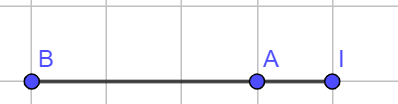
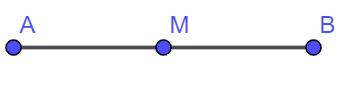
    Trên đường thẳng MN lấy điểm P sao cho \overrightarrow{MN} = -
3\overrightarrow{MP}. Điểm P được xác định đúng trong hình vẽ nào sau đây:

    Ta có \overrightarrow{MN} = -
3\overrightarrow{MP} nên MN =
3MP và \overrightarrow{MN} và \overrightarrow{MP} ngược hướng.

  • Câu 27: Nhận biết

    Cho hình bình hành ABCD tâm O và điểm M bất kỳ. Khẳng định nào sau đây đúng?

    Ta có: ABCD là hình bình hành tâm O

    => OA = OC, OB = OD

    \begin{matrix}   \Rightarrow \left\{ \begin{gathered}  \overrightarrow {MA}  + \overrightarrow {MC}  = 2\overrightarrow {MO}  \hfill \\  \overrightarrow {MB}  + \overrightarrow {MD}  = 2\overrightarrow {MO}  \hfill \\ \end{gathered}  ight. \hfill \\   \Rightarrow \overrightarrow {MA}  + \overrightarrow {MB}  + \overrightarrow {MC}  + \overrightarrow {MD}  = 4\overrightarrow {MO}  \hfill \\ \end{matrix}

  • Câu 28: Thông hiểu

    Cho tam giác ABC có M là trung điểm của BC,\ \ \ G là trọng tâm của tam giác ABC. Khẳng định nào sau đây đúng?

    Vì G là trọng tâm của tam giác ABC nên \overrightarrow{AG} =
\frac{2}{3}\overrightarrow{AM}. Vì M là trung điểm của BC nên \overrightarrow{AB} + \overrightarrow{AC} = 2\
\overrightarrow{AM} \Leftrightarrow \overrightarrow{AM} =
\frac{1}{2}\left( \overrightarrow{AB} + \overrightarrow{AC}
ight). Do đó \overrightarrow{AG}
= \frac{2}{3}.\frac{1}{2}\left( \overrightarrow{AB} +
\overrightarrow{AC} ight) = \frac{1}{3}\left( \overrightarrow{AB} +
\overrightarrow{AC} ight).

  • Câu 29: Thông hiểu

    Trong mặt phẳng tọa độ Oxy, cho tam giác ABC biết A(2;5),B(0;2),C(2;1). Tính độ dài đường trung tuyến kẻ từ đỉnh A của tam giác ABC?

    Gọi M là trung điểm của BC

    Khi đó tọa độ của M là: \left\{\begin{matrix}x_{M} = \dfrac{2 + 0}{2} = 1 \\y_{M} = \dfrac{1 + 2}{2} = \dfrac{3}{2} \\\end{matrix} ight.\  \Rightarrow M\left( 1;\dfrac{3}{2}ight)

    Suy ra độ dài đường trung tuyến kẻ từ đỉnh A hay độ dài đoạn AM là:

    AM = \sqrt{(1 - 2)^{2} + \left(
\frac{3}{2} - 5 ight)^{2}} = \frac{\sqrt{53}}{2}

    Vậy độ dài đường trung tuyến kẻ từ đỉnh A của tam giác ABC là \frac{\sqrt{53}}{2}.

  • Câu 30: Thông hiểu

    Cho tam giác ABC đều cạnh a. Tính \left| \overrightarrow{AB} + \overrightarrow{AC}
ight|.

    Gọi H là trung điểm của BC \Rightarrow AH\bot BC.

    Suy ra AH = \frac{BC\sqrt{3}}{2} =
\frac{a\sqrt{3}}{2}.

    Ta lại có \left| \overrightarrow{AB} +
\overrightarrow{AC} ight| = \left| 2\overrightarrow{AH} ight| =
2.\frac{a\sqrt{3}}{2} = a\sqrt{3}.

  • Câu 31: Vận dụng

    Trong hệ tọa độ Oxy, cho bốn điểm A(1;1),\ B(2; - 1),\ C(4;3),\ D(3;5). Khẳng định nào sau đây đúng?

    Ta có \left\{ \begin{matrix}
\overrightarrow{AB} = (1; - 2) \\
\overrightarrow{DC} = (1; - 2) \\
\end{matrix} ight.\ \overset{}{ightarrow}\overrightarrow{AB} =
\overrightarrow{DC}\overset{}{ightarrow}ABCD là hình bình hành.

  • Câu 32: Vận dụng cao

    Cho hình bình hành ABCD. Lấy hai điểm M,N sao cho \overrightarrow{CM} =
\frac{1}{2}\overrightarrow{CB};\overrightarrow{CN} =
\frac{1}{3}\overrightarrow{CD}, lấy tiếp hai điểm I,J sao cho \overrightarrow{CI} =
x\overrightarrow{CD};\overrightarrow{BJ} =
y\overrightarrow{BI}. Để J là trọng tâm tam giác AMN thì x,y thỏa mãn điều kiện nào sau đây:

    Hình vẽ minh họa

    Tìm điều kiện của x và y

    \overrightarrow{JA} +
\overrightarrow{JM} + \overrightarrow{JN} = \overrightarrow{BA} -
\overrightarrow{BJ} + \overrightarrow{JB} + \overrightarrow{BM} +
\overrightarrow{JI} + \overrightarrow{IN}

    = \overrightarrow{BA} -
2\overrightarrow{BJ} + \frac{\overrightarrow{BC}}{2} +
\overrightarrow{BI} - \overrightarrow{BJ} + \overrightarrow{CN} -
\overrightarrow{CI}

    = \overrightarrow{BA} +
\frac{\overrightarrow{BC}}{2} + ( - 3y + 1).\overrightarrow{BI} +
\overrightarrow{CN} - \overrightarrow{CI}

    = \overrightarrow{BA} +
\frac{\overrightarrow{BC}}{2} + ( - 3y + 1).\left( \overrightarrow{BC} +
\overrightarrow{CI} ight) + \overrightarrow{CN} -
\overrightarrow{CI}

    = \overrightarrow{BA} + \left(
\frac{3}{2} - 3y ight)\left( \overrightarrow{AC} - \overrightarrow{AB}
ight) + \overrightarrow{CN} - 3y.\overrightarrow{CI}

    = \overrightarrow{BA} + \left(
\frac{3}{2} - 3y ight)\left( \overrightarrow{AC} - \overrightarrow{AB}
ight) + \frac{1}{3}\overrightarrow{CD} -
3xy.\overrightarrow{CD}

    = \overrightarrow{BA} + \left(
\frac{3}{2} - 3y ight)\left( \overrightarrow{AC} - \overrightarrow{AB}
ight) + \left( \frac{1}{3} - 3xy
ight).\overrightarrow{BA}

    = \left( - \frac{17}{6} + 3y + 3xy
ight).\overrightarrow{AB} + \left( \frac{3}{2} - 3y
ight).\overrightarrow{AC}

    Để J là trọng tâm tam giác AMN thì

    \overrightarrow{JA} +
\overrightarrow{JM} + \overrightarrow{JN} =
\overrightarrow{0}

    \Leftrightarrow \left( - \frac{17}{6} +
3y + 3xy ight).\overrightarrow{AB} + \left( \frac{3}{2} - 3y
ight).\overrightarrow{AC} = \overrightarrow{0}

    Mặt khác do \overrightarrow{AB};\overrightarrow{AC} không cùng phương nên ta suy ra:

    \left\{ \begin{matrix}- \dfrac{17}{6} + 3y + 3xy = 0 \\\dfrac{3}{2} - 3y = 0 \\\end{matrix} ight.\  \Leftrightarrow \left\{ \begin{matrix}x = \dfrac{8}{9} \\y = \dfrac{1}{2} \\\end{matrix} ight.

    Vậy với x = \frac{8}{9};y =
\frac{1}{2} thì điểm J là trọng tâm tam giác AMN.

  • Câu 33: Thông hiểu

    Cho ngũ giác ABCDE. Có bao nhiêu vectơ khác vectơ – không có điểm đầu và điểm cuối là đỉnh của ngũ giác đó?

    \overrightarrow{AB},\overrightarrow{AC},\overrightarrow{AD},\overrightarrow{AE}, \overrightarrow{BA},\overrightarrow{BC},\overrightarrow{BD},\overrightarrow{BE}, \overrightarrow{CA},\overrightarrow{CB},\overrightarrow{CD},\overrightarrow{CE}, \overrightarrow{DA},\overrightarrow{DC},\overrightarrow{DB},\overrightarrow{DE}, \overrightarrow{EA},\overrightarrow{EC},\overrightarrow{EB},\overrightarrow{ED}.

  • Câu 34: Thông hiểu

    Trong mặt phẳng tọa độ Oxy, cho tọa độ hai điểm A(1;5),B(2;6). Tìm tọa độ điểm C đối xứng với điểm B qua A?

    Gọi tọa độ điểm C là C(x;y)

    Vì điểm C đối xứng với điểm B qua A suy ra A là trung điểm của BC

    \Leftrightarrow \left\{ \begin{matrix}1 = \dfrac{- 2 + x}{2} \\5 = \dfrac{6 + y}{2} \\\end{matrix} ight.\  \Leftrightarrow \left\{ \begin{matrix}x = 4 \\y = 4 \\\end{matrix} ight.\  \Leftrightarrow C(4;4)

    Vậy tọa độ điểm C cần tìm là C(4;4).

  • Câu 35: Thông hiểu

    Cho hai vectơ \overrightarrow{a} và \overrightarrow{b} khác \overrightarrow{0}. Xác định góc \alpha giữa hai vectơ \overrightarrow{a} và \overrightarrow{b} khi \overrightarrow{a}.\overrightarrow{b} = - \left|
\overrightarrow{a} ight|.\left| \overrightarrow{b}
ight|.

    \overrightarrow{a}.\overrightarrow{b} =
\left| \overrightarrow{a} ight|.\left| \overrightarrow{b}
ight|.cos(\overrightarrow{a},\overrightarrow{b}) = - \left|
\overrightarrow{a} ight|.\left| \overrightarrow{b} ight| nên cos(\overrightarrow{a},\overrightarrow{b}) = - 1
\Rightarrow (\overrightarrow{a},\overrightarrow{b}) =
180^{o}.

  • Câu 36: Nhận biết

    Cho \overrightarrow{a} và \overrightarrow{b} là các vectơ khác \overrightarrow{0} với \overrightarrow{a} là vectơ đối của \overrightarrow{b}. Khẳng định nào sau đây sai?

    Ta có \overrightarrow{a} = -
\overrightarrow{b}. Do đó, \overrightarrow{a} và \overrightarrow{b} cùng phương, cùng độ dài và ngược hướng nhau.

    Chọn đáp án sai là: Hai vectơ \overrightarrow{a},\ \ \overrightarrow{b} chung điểm đầu.

  • Câu 37: Nhận biết

    Trong hệ tọa độ Oxy cho tọa độ hai điểm A(2; - 3),B(4;7). Tìm tọa độ trung điểm I của đoạn thẳng AB?

    Tọa độ trung điểm của AB là: \left\{\begin{matrix}x_{I} = \dfrac{2 + 4}{2} = 3 \\y_{I} = \dfrac{- 3 + 7}{2} = 2 \\\end{matrix} ight.\  \Rightarrow I(3;2)

  • Câu 38: Nhận biết

    Trong hệ trục tọa độ Oxy, cho hai điểm A(2; - 1),B(4;3). Tọa độ của véctơ \overrightarrow{AB} bằng

    \overrightarrow{AB} = \left( x_{B} -
x_{A};y_{B} - y_{A} ight) \Rightarrow \overrightarrow{AB} = (2;4).

  • Câu 39: Nhận biết

    Cho hình vuông ABCD, tính cos(\overrightarrow{AB},\overrightarrow{CA}).


    Vẽ \overrightarrow {CE}  = \overrightarrow {AB}.

    Ta có: \left( {\overrightarrow {AB} ,\overrightarrow {CA} } ight) = \left( {\overrightarrow {CE} ,\overrightarrow {CA} } ight) = 45^\circ  + 90^\circ  = 135^\circ\Rightarrow \cos 135^\circ  = \frac{{ - \sqrt 2 }}{2}.


  • Câu 40: Thông hiểu

    Cho tam giác ABC vuông tại A có AB = 3, AC = 4. Tính độ dài \overrightarrow{CB}+\overrightarrow{AB}

    Dựng hình bình hành tâm O như sau:

    Tính độ lớn tổng vectơ

    Ta có:

    \begin{matrix}  \overrightarrow {CB}  + \overrightarrow {AB}  = \overrightarrow {DA}  + \overrightarrow {DC}  = \overrightarrow {DB}  \hfill \\   \Rightarrow \left| {\overrightarrow {CB}  + \overrightarrow {AB} } ight| = \left| {\overrightarrow {DB} } ight| = DB = 2OB \hfill \\ \end{matrix}

    Vì tam giác AOB vuông tại A ta có:

    \begin{matrix}  B{O^2} = A{B^2} + A{O^2} \hfill \\   \Rightarrow B{O^2} = {3^2} + {2^2} = 13 \hfill \\   \Rightarrow BO = \sqrt {13}  \hfill \\   \Rightarrow \left| {\overrightarrow {CB}  + \overrightarrow {AB} } ight| = \sqrt {13}  \hfill \\ \end{matrix}

Chúc mừng Bạn đã hoàn thành bài!

Đề kiểm tra 45 phút Chương 5 Vectơ Sách CTST Kết quả
  • Thời gian làm bài: 00:00:00
  • Số câu đã làm: 0
  • Điểm tạm tính: 0
  • 70 lượt xem
Sắp xếp theo